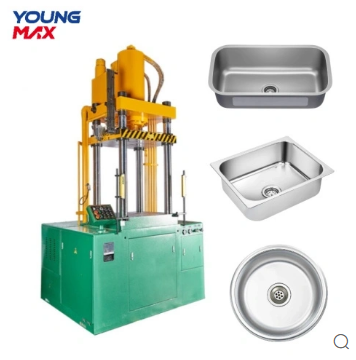
Stretching and forming are two key processes used in the manufacture of various products, from packaging materials to automobile body parts. The machinery used for these processes is classified based on its function, and in this article, we'll explore the differences between Drawing And Forming Machinery.
Stretching Machinery:
Stretching is the process of elongating a material beyond its original length or dimensions to create a new shape or form. This process is commonly used in the packaging industry to create plastic films and sheets, as well as in the production of plastic fibers and textiles.
Stretching machinery works by pulling a material in one or two directions, depending on the desired outcome. The material is typically heated to its softening point to allow it to stretch more easily. There are two main types of stretching machinery:
1. Uniaxial Stretching Machinery: This type of machinery stretches a material in one direction, which creates a material with increased strength in that direction. Examples of products made using uniaxial stretching include film packaging and plastic bags.
2. Biaxial Stretching Machinery: This type of machinery stretches a material in two directions, which creates a material with increased strength in both directions. Examples of products made using biaxial stretching include plastic bottle caps and plastic containers.
Forming Machinery:
Forming is the process of shaping a material into a specific form or shape, often requiring the use of a mold or die. This process is commonly used in the automotive industry to create metal parts, as well as in the production of plastic products such as cups and containers.
Forming machinery works by applying pressure to a material to shape it into a specific form. There are several types of forming machinery:
1. Presses: These machines use a die and punch to shape materials such as metal, plastic, and rubber into specific forms.
2. Injection Molding Machines: These machines inject melted plastic into a mold to create products such as plastic cups and containers.
3. Blow Molding Machines: These machines blow compressed air into a mold to create products such as plastic bottles.
In conclusion, stretching and forming are essential processes in modern manufacturing, and the machinery used for each process is designed to perform specific functions. Stretching machinery elongates materials, while forming machinery shapes them into specific forms or shapes. Understanding the differences between Drawing And Forming Machinery and their functions is critical for businesses working within these industries.