

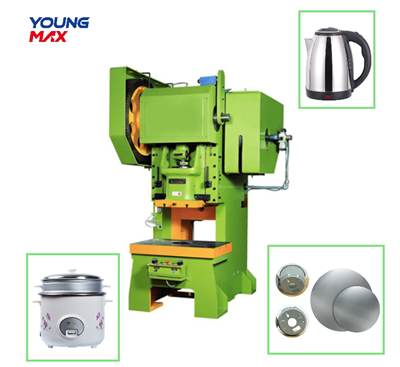
Precision pneumatic punches are essential tools for creating accurate holes, slots, or shapes in various materials, from metals to plastics. These machines rely on compressed air to exert force and precision in punching tasks.
Key Features:
1. High Precision: Precision pneumatic punches offer precise control over the punching process, ensuring accuracy in hole placement and size.
2. Versatile Applications: They are suitable for a wide range of materials and are used in industries such as automotive, electronics, and sheet metal fabrication.
3. Quick Operation:Pneumatic punches are known for their rapid punching speeds, contributing to increased manufacturing efficiency.
Precision Hydraulic Punch:
Precision hydraulic punches are powerful tools designed for heavy-duty punching tasks. They utilize hydraulic force to create holes and shapes in thick or challenging materials.
Key Features:
1. High Force: Hydraulic punches provide significant force, making them suitable for piercing through thick metals and challenging materials.
2.Safety Features:Many hydraulic punches incorporate safety mechanisms to protect operators and prevent tool damage during operation.
3. Customization: These machines can be adapted for specific applications by choosing the appropriate punch and die sets.
Mechanical Punch:
Mechanical punches are traditional yet reliable tools for punching holes in materials. They are operated manually, making them suitable for smaller-scale tasks and maintenance work.
Key Features:
1. Simplicity: Mechanical punches are straightforward to operate and maintain, making them a cost-effective solution for small-scale or occasional punching needs.
2. Portability: These punches are often compact and lightweight, allowing for ease of transport and on-site use.
3. Durability: Mechanical punches are known for their durability and longevity, requiring minimal maintenance.
Riveting Machine:
Riveting machines are crucial in various industries for joining and fastening components. They provide a secure and permanent connection between materials, enhancing the structural integrity of products.
Key Features:
1. Versatility: Riveting machines can accommodate a variety of materials and sizes, making them valuable in industries such as construction, aerospace, and automotive.
2. Consistent Results: These machines ensure consistent and reliable riveting results, minimizing the risk of assembly defects.
3. Efficiency:Riveting machines are designed for efficiency, reducing labor costs and assembly time in mass production.
In Conclusion:
The manufacturing industry benefits from a wide range of punching and riveting technologies, each with its own set of features and applications. Precision pneumatic and hydraulic punches offer high precision and force for various materials, while mechanical punches provide simplicity and portability for smaller-scale tasks. Riveting machines contribute to secure and efficient assembly processes, ensuring the quality and integrity of the final product. The choice of equipment depends on the specific manufacturing needs and materials involved, with each technology contributing to improved production efficiency and quality.